
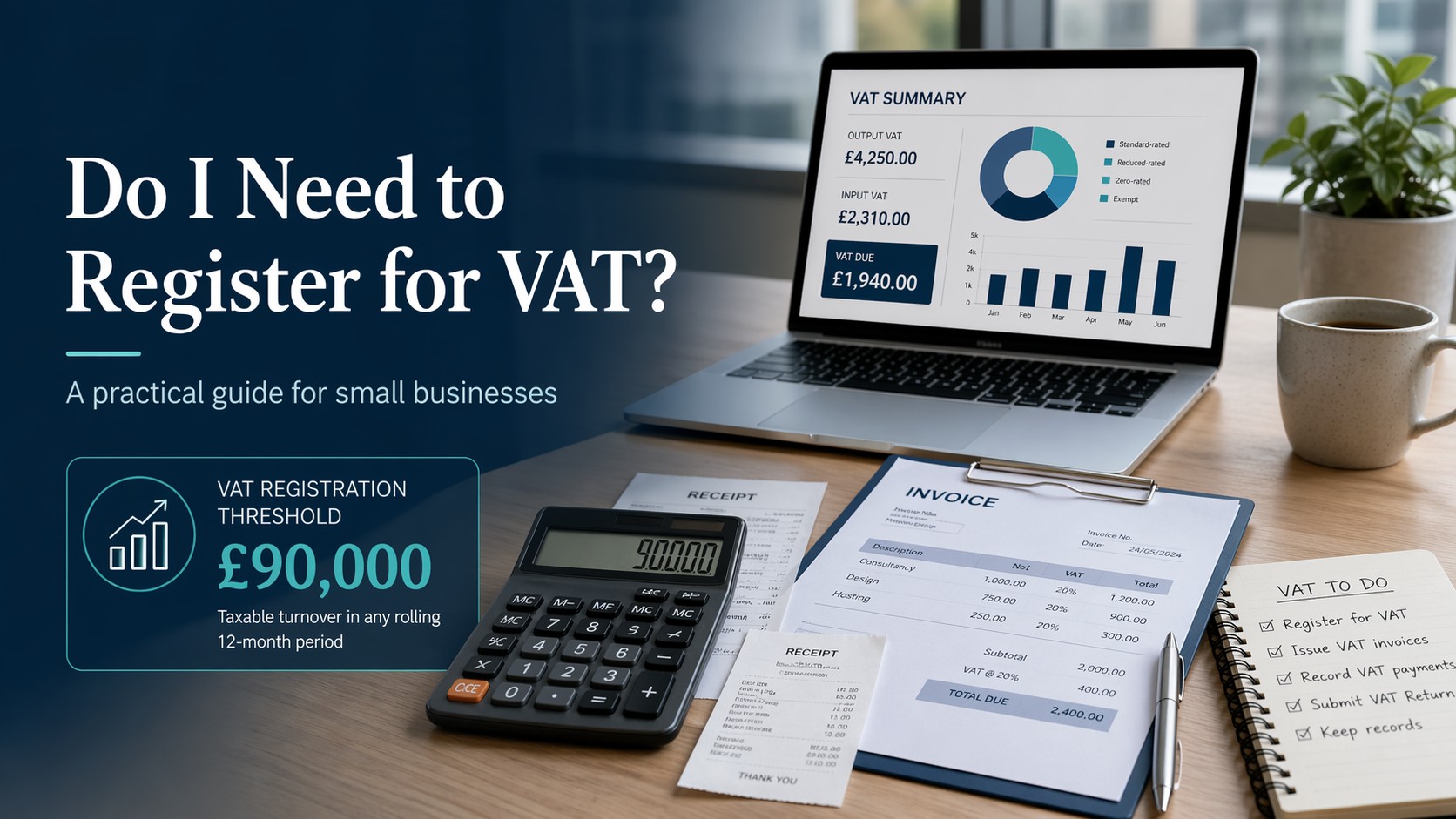
Do I Need to Register for VAT? A Practical Guide for Small Businesses
VAT is one of those areas many business owners put off thinking about until it becomes urgent.
That can work for a while, but if turnover is growing it is something you should keep under review. The current VAT registration threshold is £90,000, and the deregistration threshold is £88,000. HMRC confirms that the registration threshold increased from £85,000 to £90,000 with effect from 1 April 2024, and that businesses may deregister if taxable turnover falls below £88,000.
What counts towards the VAT threshold?
This is where many businesses get caught out. VAT registration is based on taxable turnover, not profit. HMRC defines taxable turnover as the total value of everything you sell or supply that is not exempt from VAT. So if you are focusing only on profit, you may be monitoring the wrong figure.
When is VAT registration compulsory?
VAT registration is normally compulsory if your taxable turnover in the last 12 months goes over £90,000. HMRC also says you must register if you expect your taxable turnover to go over £90,000 in the next 30 days alone. If you exceeded the threshold over the previous 12 months, you usually have to register within 30 days of the end of the month in which you went over it.
That rolling 12-month test is important. It is not based only on your accounting year or tax year. A business can creep over the threshold without realising it if no one is monitoring turnover properly month by month.
Should you register voluntarily?
Sometimes yes, sometimes no.
Voluntary VAT registration can make sense if your customers are mainly VAT-registered businesses, if you have significant VAT-bearing costs, or if you want to recover input VAT and get systems in place before registration becomes compulsory. But it is not always beneficial. If your customers are mainly members of the public or non-VAT-registered customers, VAT registration can make your prices less competitive unless you absorb the VAT cost yourself. HMRC’s VAT registration guidance includes a tool specifically aimed at helping businesses think through what registration may mean in practice.
VAT registration now usually means digital record-keeping as well
VAT registration is no longer just about charging VAT and submitting a return every quarter. In practice, VAT-registered businesses are generally expected to keep digital VAT records and file using compatible software unless an exemption applies. That is part of Making Tax Digital for VAT.
So if your bookkeeping is not up to date, or you are still relying heavily on paper records or incomplete spreadsheets, VAT can become much more difficult than it needs to be.
Common mistakes businesses make
A few common issues are looking at profit instead of turnover, forgetting that the 12-month test is rolling, registering too late, or registering voluntarily without properly considering the effect on pricing and bookkeeping.
Final thoughts
VAT should ideally be reviewed before it becomes urgent. Leaving it too late can create problems around pricing, record-keeping and effective date of registration.
If you are unsure whether your business needs to register, or whether voluntary registration would help or hinder you, it is worth getting advice before making the move.
Need help with VAT registration or VAT returns?
PR Accountants Ltd supports UK small businesses with VAT registration, VAT returns and practical bookkeeping support.